
A Complete Guide To The Ireland Student Visa Process
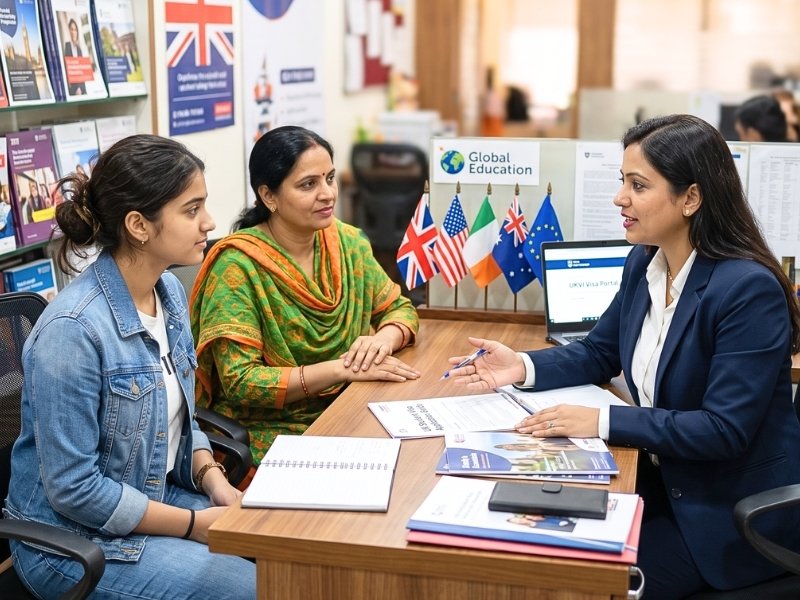
Ireland Student Visa Requirements For International Students
Every non-EU/EEA student planning to study in Ireland for more than 90 days needs the appropriate immigration permission. For visa-required students, this generally means applying for a Long Stay ‘D’ study visa before travelling to Ireland. The application places significant emphasis on accurate documentation, proof of finances, academic eligibility and evidence of your intended course of study.
The UK Student Visa, officially called the Student Route and formerly known as the Tier 4 (General) Student Visa, is required for international students who want to study full-time at a licensed UK institution. It allows students to live, study and work part-time in the UK for the length of their course.
For students starting a one-year course, the current financial requirement is at least €10,000 in immediately accessible funds, in addition to the required course fees. Applicants must also provide evidence of their financial resources and account for any gaps in their education or employment history.
The following sections cover the Ireland student visa types, current financial requirements, document checklist, visa fees, processing timelines and the registration process after arrival, with a focus on students applying from India.
Types Of Ireland Student Visa
C-Type (Short-Stay) Visa
For study programmes lasting 90 days or less, including short-term English language courses. It is intended for temporary study and allows students to remain in Ireland only for the approved short-stay period.
Visa Fees: Rs.6,520 (€60)
D-Type (Long-Stay) Visa
For study programmes lasting more than 90 days, including most undergraduate and postgraduate degrees. After arriving, students must register for an Irish Residence Permit (IRP) and generally receive Stamp 2 student permission.
Visa Fees: Rs.6,520 (€60)
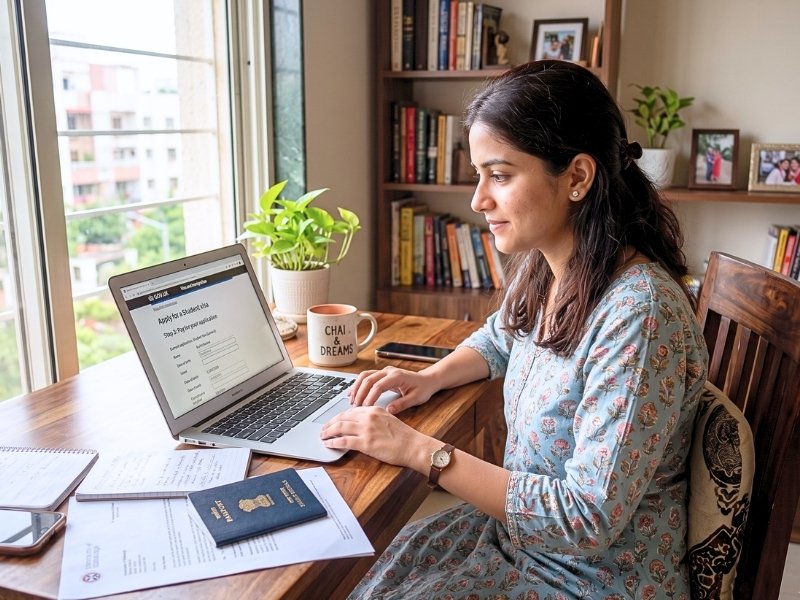
Ireland Student Visa Eligibility
To be eligible for the Ireland student visa process, you need:
- An unconditional offer for a full-time course from an institution listed on Ireland's approved programme list (the Interim List of Eligible Programmes, transitioning to the Trusted Ireland framework)
- Evidence of English language proficiency accepted by your specific institution (IELTS, TOEFL, PTE or Duolingo)
- Evidence of sufficient funds (detailed below)
- Compliant private medical insurance
- A clean immigration and character record and a credible explanation of any gaps in your education history
Ireland Student Visa Process Documents Requirement
Letter Of Acceptance
Confirmation of admission from an approved Irish institution
Valid Passport
Passport valid for the intended period of stay
Fee Payment Proof
Shows that the required amount of tuition has been paid
Financial Evidence
Six months of bank statements or an approved education bond
Private Medical Insurance
Covers hospital treatment, accidents and illness
English Test Score
English test score report (IELTS, TOEFL, PTE or equivalent, as required )
Passport Photographs
Two recent passport-size colour photographs
Statement Of Purpose
A signed letter of application explaining your study intent
Academic Documents
Transcripts and certificates, with education gaps explained
Evidence Of Leaving Ireland
Commitment to leave Ireland once your permission expires
CAS
Requirement
Valid
Passport
English
Proficiency
Financial
Capacity
Student
Criteria
TB Test
Certificate
ATAS
Certificate
Immigration
Criteria
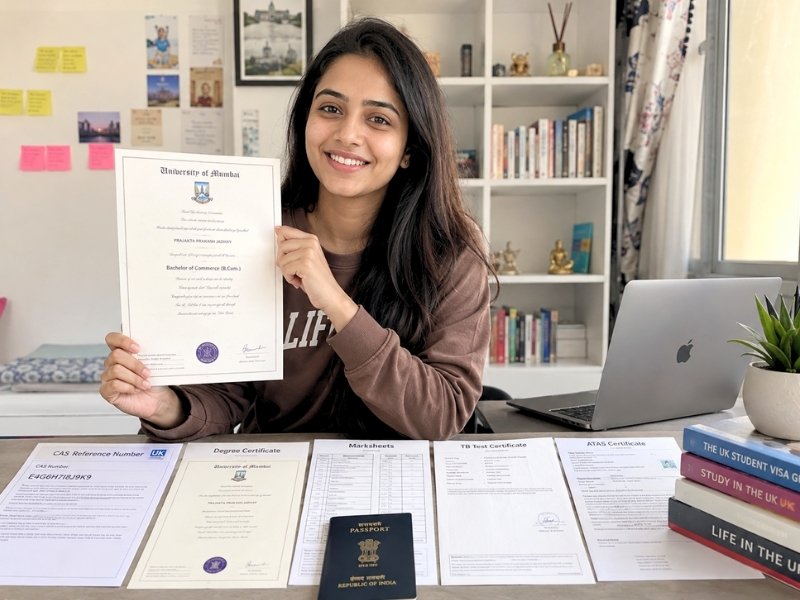
Financial Requirement - How Much Money You Need
This is a key stage where applications can often face delays, so it should be given dedicated attention rather than treated as an afterthought.
- For any course lasting more than 8 months, Immigration Service Delivery requires immediate access to at least €10,000 to cover one year's living costs. This is separate from and in addition to, your tuition fees.
- For shorter courses (8 months or less), the requirement is €833 per month of your stay, capped at €6,665.
- Since 30 June 2025, you must also show that at least €6,000 of your tuition has already been paid to your institution before ISD will approve the visa; your offer letter needs to explicitly show this payment received.
- Funds can be shown through 6 months of personal bank statements, an education loan sanction letter from an approved bank, sponsor income documents, or a €10,000 education bond lodged with an approved fee-payment service (an alternative some degree students use instead of bank statements).
- Visa officers check consistency, not just the final balance. A large, unexplained lump-sum deposit shortly before applying is one of the more common reasons for a request for further evidence.
Key Factors In Visa Approval
Focus on the key requirements for a strong application
Financial Capacity
Beyond the headline €10,000 figure, ISD wants a believable financial story: savings that built up over time, a loan from a recognised bank, or a sponsor whose income plausibly supports your costs.
Genuine Student Intent
Your Statement of Purpose needs to answer, clearly and consistently with your documents, why this course, why Ireland and how it connects to your academic and career background. Vague or copy-pasted SOPs are one of the most common triggers for additional scrutiny.
Student Visa Fees & Processing Timeline
Know the costs and expected processing time before applying
Visa Fees & IRP Registration Cost
A single-journey visa costs €60 (approximately ₹6,650), while a multi-journey visa costs €100 (approximately ₹11,080). Visa fees are non-refundable, even if the application is refused or withdrawn. After arriving in Ireland, IRP registration carries a separate mandatory fee of €300 (approximately ₹33,240), payable by card at the registration appointment.
Conversions are based on an indicative exchange rate of €1 = ₹110.8 as of September 2026.
Student Visa Processing Time
Most D-type student visa applications are processed within 4 to 8 weeks, though timelines shift with application volume and how complete your documentation is on first submission. Since a resubmission for missing documents restarts part of the clock, it’s worth applying at least 4-6 months before your intended travel date rather than treating the 4-8 week window as your real buffer.
Ireland Student Visa Application Process
Understand the key steps to apply
1. Accept Your Offer
Receive your offer letter, accept your place and pay the required deposit to your institution.
3. Arrange Medical Insurance
Arrange private medical insurance that meets the required accident and illness coverage for Ireland.
5. Write your SOP
Write an SOP that connects your academic background, chosen course and future career plans clearly.
7. Complete Biometrics
Attend your biometrics appointment if required and follow the instructions provided by the application centre.
9. Track your application
Track your visa application regularly and respond quickly if additional documents or information are requested.
2. Pay Tuition Fees
Pay at least €6,000 towards your tuition fees and keep the payment proof ready for submission.
4. Organise your financial documents
Prepare six months of bank statements, a loan sanction letter or an education bond as proof.
6. Complete the online visa application
Complete the AVATS application online, check every detail and print your application summary form.
8. Submit your full document set
Submit your application form, passport and complete supporting documents through the designated visa centre.
10. Prepare for Arrival
On approval, book travel and prepare to register for your IRP within 90 days of arrival in Ireland.
After You Land: IRP Registration
Landing in Ireland is not the end of the process. Every D-type visa holder must register in person for an Irish Residence Permit (IRP) within 90 days of arrival, through the ISD portal appointment system. Bring your passport, offer/enrolment confirmation, proof of address and insurance documents. The IRP registration fee is €300, payable by card only and the card itself is what you’ll show for banking, renting and part-time work throughout your stay.

Visa Interview Tips
Not every applicant is called for an interview, but a small share are, usually for verification rather than as a routine step.
- Know your course, university and career reasoning well enough to explain it without sounding rehearsed
- Keep your answers consistent with your SOP and financial documents; contradictions are flagged more than any single weak answer
- Be upfront about study gaps rather than glossing over them
- Practice explaining, briefly, why Ireland specifically over other destinations you may have considered
If you need support with visa interview preparation, application guidance and practical visa tips, you can consult iVish Study Abroad, an Ireland student visa consultant in Mumbai.
FAQs
How much bank balance is required for a student visa in Ireland?
You need immediate access to at least €10,000 to cover one year of living costs, on top of proof that at least €6,000 of your tuition has already been paid to your institution. If you need help understanding the financial requirements, consulting an experienced Ireland student visa consultants in Mumbai, can guide you through the documentation process.
How long does the Ireland student visa process take?
Processing typically takes 4 to 8 weeks from submission, though applying 4-6 months ahead of your travel date gives you a realistic buffer for any additional document requests. With 99% visa success rate iVish Study Abroad, one of the experienced Ireland student visa consultants in Mumbai provides guidance on application timelines, document preparation, financial requirements and other key visa requirements to help students prepare their applications correctly.
Can I work while on an Ireland student visa?
Yes. Stamp 2 holders can work up to 20 hours a week during term time and full-time during scheduled college holidays, which most students use to offset part of their living costs. Students planning their studies can consult iVish Study Abroad, among the Ireland student visa consultants in Mumbai, to understand the conditions associated with their student permission.
Is there any interview for Ireland student visa?
Not always. Interviews are called selectively for verification rather than as a standard step and are typically used to confirm study intent and check consistency with your submitted documents. If you need support with visa preparation, interview guidance and practical tips to strengthen your application, iVish Study Abroad, a leading Ireland student visa consultant in Mumbai, can help you prepare for the visa process.
Is an Ireland student visa difficult to get?
An Ireland student visa is generally not difficult to obtain if you meet the required financial, academic and immigration requirements. With an estimated success rate of 95% to 97%, applicants should focus on submitting complete documentation, demonstrating sufficient finances and presenting a clear study plan. For expert guidance, visa preparation and practical tips, you can consult an experienced Ireland student visa consultant in Mumbai.
Start Your Ireland Student Visa Process With Expert Support
speak to our expert counsellors
