Part-Time Jobs In USA For International Students
part time jobs in usa

Work While You Study in the USA
Finding suitable employment while studying can help international students gain practical experience, develop workplace skills, and manage some personal expenses. Exploring part time jobs in USA can introduce students to opportunities in university libraries, campus cafés, dining facilities, bookstores, and other eligible workplaces. Many USA part time jobs for international students are available through university departments and campus employers, depending on vacancies and individual eligibility. Students searching for part time jobs in USA for students should consider their class schedules, academic responsibilities, location, and applicable visa conditions before applying. For Indian applicants, an Indian student part time job in USA may provide valuable experience in communication, teamwork, customer service, or research. However, students must understand the employment rules associated with their immigration status before accepting any position. Exploring part time jobs in USA for Indian students should begin with checking campus job listings and speaking with the university’s international student office. At iVish Study Abroad, students can explore overseas education guidance and plan their study journey. Visit our Study in USA guide to learn more about studying in America, and explore our Cost of Living in USA page to plan your education budget. For official employment guidance, read the US Immigration and Customs Enforcement’s F-1 student employment rules, which explain on-campus work and restrictions on off-campus employment. Eligible F-1 students can generally work up to 20 hours per week on campus while school is in session, subject to applicable rules. Before accepting part time jobs in USA, students should verify that their employment is permitted. Comparing available USA part time jobs for international students and part time jobs in USA for students can help applicants find suitable roles without neglecting their studies. Indian applicants researching an Indian student part time job in USA or part time jobs in USA for Indian students should always confirm their individual work eligibility with their designated school official (DSO) before beginning employment.
- part time jobs in usa
- usa part time jobs for international students
- part time jobs in usa for students
- indian student part time job in usa
- part time jobs in usa for indian students
Work Rights For International Students In The USA

Allowed Working Hours
- part time jobs in usa
- usa part time jobs for international students
- part time jobs in usa for students
- indian student part time job in usa
- part time jobs in usa for indian students
As an F-1 student, here is what you are permitted to do:
- Work up to 20 hours per week on campus while classes are in session
- Work full-time on campus during official school breaks such as winter, spring and summer holidays, provided you plan to continue your studies afterwards
Off-Campus Work Is Restricted By Design
Minimum Wage And Workplace Rights
- part time jobs in usa
- usa part time jobs for international students
- part time jobs in usa for students
- indian student part time job in usa
- part time jobs in usa for indian students
- Federal minimum wage stands at USD 7.25 per hour, though this has not moved since 2009
- Many states pay far higher rates; for example, all set minimum wages above USD 16 per hour
- Part-time wages vary by state, as some states offer higher minimum wages than the federal rate
Students working legally are entitled to :
- Timely and correct wage payment for hours worked
- A safe working environment
- Protection against workplace discrimination
- Pay stubs and accurate employment records
- The same wage floor protections as domestic student workers

Minimum Wage And Workplace Rights
- Federal minimum wage stands at USD 7.25 per hour, though this has not moved since 2009
- Many states pay far higher rates; for example, all set minimum wages above USD 16 per hour
- Part-time wages vary by state, as some states offer higher minimum wages than the federal rate
Students working legally are entitled to :
- Timely and correct wage payment for hours worked
- A safe working environment
- Protection against workplace discrimination
- Pay stubs and accurate employment records
- The same wage floor protections as domestic student workers

Social Security Number (SSN)
Why international students need an SSN
- It is required to be paid legally for on-campus employment, CPT or OPT
- Without it, your employer cannot process your wages correctly
- It is needed to file US taxes at the end of the year
- Some banks and phone providers ask for it during account setup
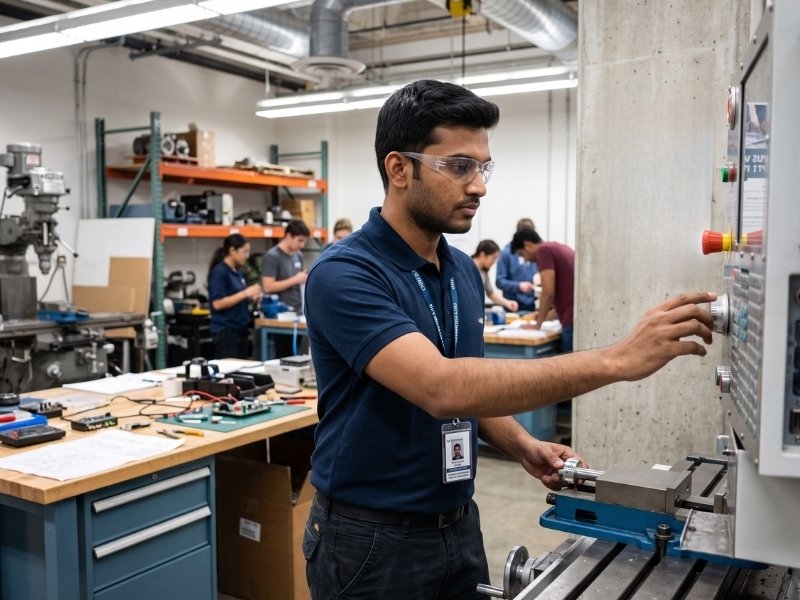
Off-Campus Work: CPT and OPT
Curricular Practical Training (CPT)
Optional Practical Training (OPT)
Off-Campus Work: CPT and OPT
Curricular Practical Training (CPT)
Optional Practical Training (OPT)
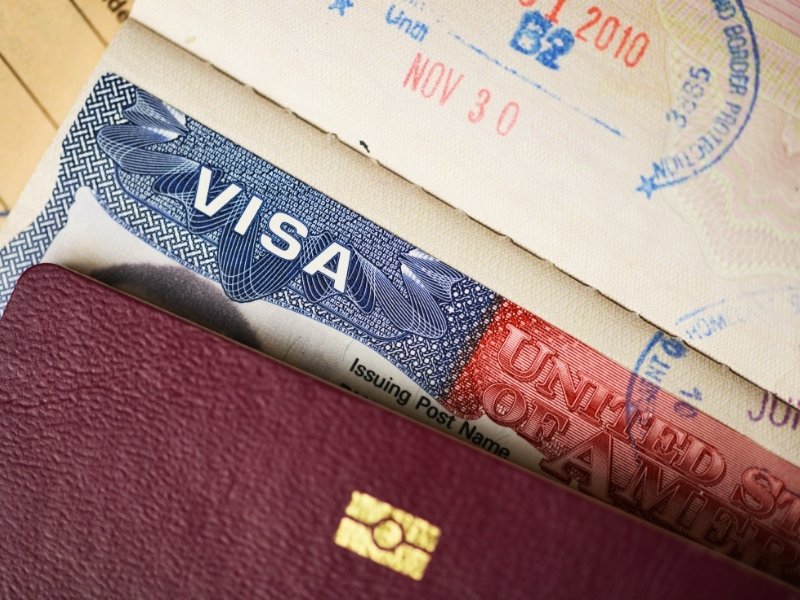
Why Following Visa Conditions Is Important
- part time jobs in usa
- usa part time jobs for international students
- part time jobs in usa for students
- indian student part time job in usa
- part time jobs in usa for indian students
Potential consequences of exceeding work limits or working without authorisation include
- Termination of your SEVIS record and loss of F-1 status
- Denial of future US visa applications, including work visas such as H-1B
- Complications during OPT or green card processing years later
- In serious cases, removal proceedings from the United States
Key Takeaway
Popular Part-Time Jobs In USA
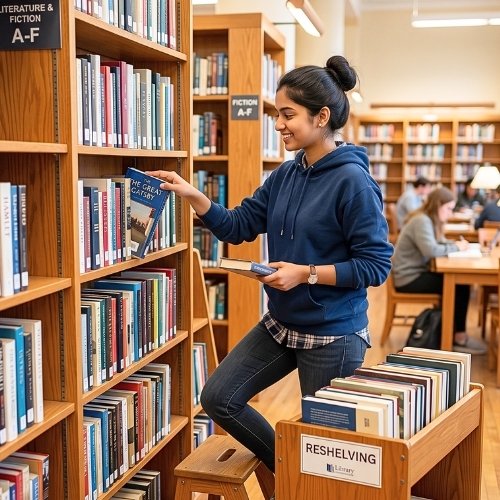
On-Campus Jobs
Popular Job Roles:
- Library assistant
- Dining hall or cafeteria staff
- Front desk assistant
- Teaching assistant
- IT help desk assistant
Skills gained:
- Time management
- Workplace communication
- Familiarity with US office and campus culture
Average pay
USD 12 to USD 18
per hour

Retail Jobs
Popular Job Roles:
- Sales associate
- Cashier
- Stock and inventory assistant
Skills gained:
- Customer handling
- Point of sale systems
- Teamwork under pressure
Average pay
USD 12 to USD 16
per hour
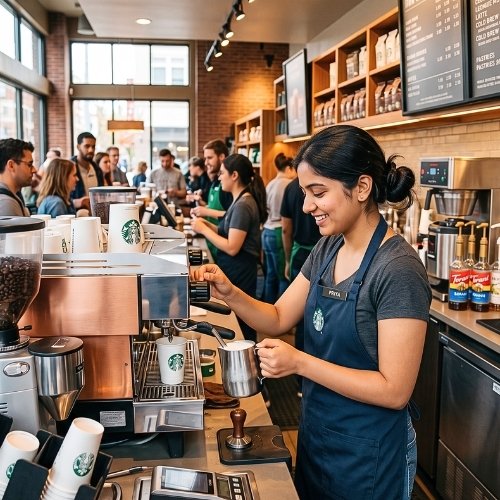
Food Service and Hospitality Jobs
Popular Job Roles:
- Barista
- Server or waitstaff
- Kitchen or food prep assistant
Skills gained:
- Working in a fast-paced environment
- Customer service
- Handling transactions
Average pay
USD 13 to USD 18
per hour
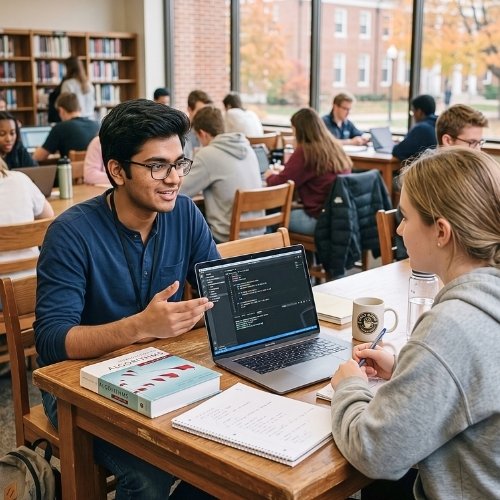
Tutoring Jobs
Subjects in demand:
- Mathematics and statistics
- Computer science and programming
- Physics and chemistry
- English and writing support
Skills gained:
- Teaching ability
- Subject mastery
- One-on-one communication
Average pay
15 to USD 30
per hour
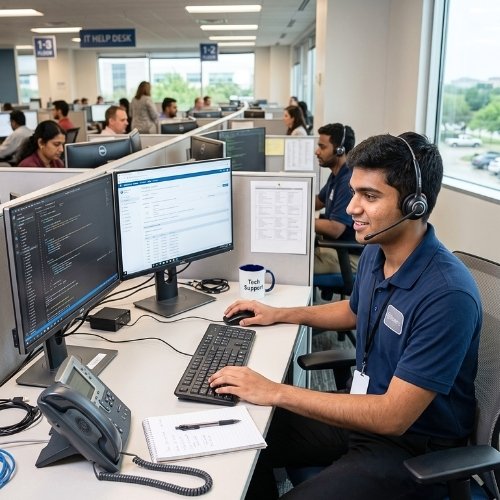
Customer Service Jobs
Popular roles:
- Help desk or IT support assistant
- Front office assistant
- Student services representative
Skills gained:
- Professional communication
- Problem solving
- Handling real user queries
Average pay
USD 14 to USD 18
per hour
How to Find Part-Time Jobs in USA
Online Portals
Help Wanted Sign
Offline portals
Benefits Of Working While Studying In The USA
Financial Independence
Students Benefit by:
- Reducing financial dependence on family for daily expenses
- Learning to balance a fixed income with monthly spending
- Building basic budgeting and financial planning habits
- Covering small personal expenses without added stress
Gaining Work Experience
Students build practical skills such as:
- Workplace communication
- Professional email and reporting habits
- Time management under academic pressure
- Basic problem-solving in a real work setting
Networking Opportunities
Students gain from:
- Direct exposure to managers and supervisors across different industries
- Reference letters from verified US employers
- Introductions to hiring managers for future openings
- Early connections that can support the OPT and H-1B job search later
Building Confidence
Students often become more confident in:
- Speaking English in professional and customer-facing settings
- Handling workplace responsibilities independently
- Working alongside colleagues from different cultural backgrounds
- Communicating clearly under pressure
- Adapting quickly to new and unfamiliar situations
Developing Time Management Skills
Balancing 20 hours of work with a full course load, assignments and exams is genuinely demanding. Students who manage this well typically graduate with strong organisational habits that continue to serve them in full-time careers.
Working while studying teaches students how to:
- Prioritise academic deadlines alongside work shifts
- Plan weekly schedules around classes, assignments and jobs
- Maintain a healthy balance between study and work commitments
- Stay organised during high-pressure periods like exams
Better Career Prospects
Early work experience helps students:
- Build a US-based resume before applying for OPT
- Show employers proof of workplace readiness
- Strengthen applications for CPT and OPT positions
- Stand out during H-1B sponsorship conversations
Conclusion
FAQs
Find the Right Part-Time Job While Studying in the USA
Our experts will simplify it for you