
Start Your Study Abroad Journey With Complete Visa Guidance
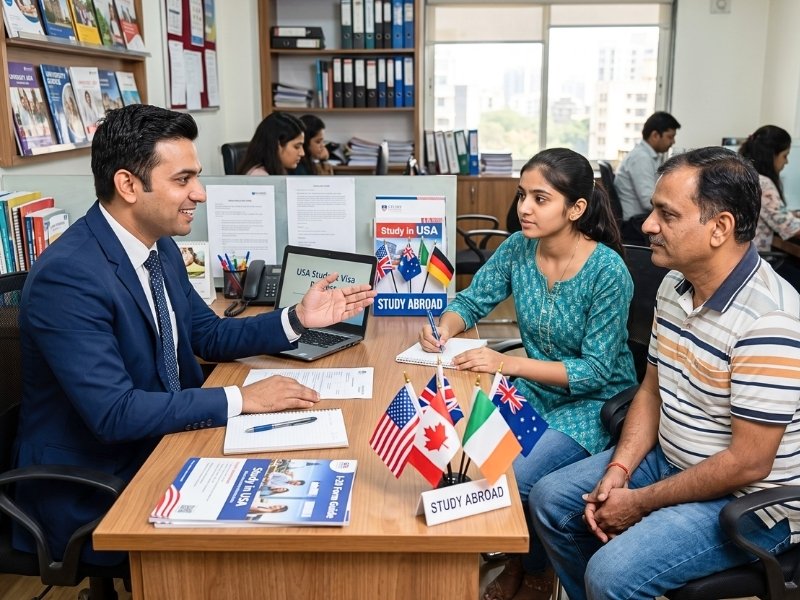
USA Student Visa Process (F-1 Visa)
Types of US Student Visas
F-1 Visa - Academic Student Visa
This is the visa used by majority of international students enrolled in full-time academic programs such as bachelor's degrees, master's degrees, MBAs and PhDs at SEVP-certified colleges and universities.
M-1 Visa - Vocational Student Visa
This visa is for students enrolled in non-academic or vocational training programs. M-1 holders face stricter work restrictions than F-1 students and cannot switch majors as freely.
J-1 Visa - Exchange Visitor Visa
This is a student visa used for exchange programs, research scholars and funded academic programs. J-1 holders face a two-year home residency requirement depending on their program and funding source.
Eligibility Criteria
Form I-20
Valid Passport
English Proficiency
Financial Capacity
Nonimmigrant Intent
Academic Preparation
Clean Immigration Record
Form
I-20
Valid
Passport
English
Proficiency
Financial
Capacity
Nonimmigrant
Intent
Academic
Preparation
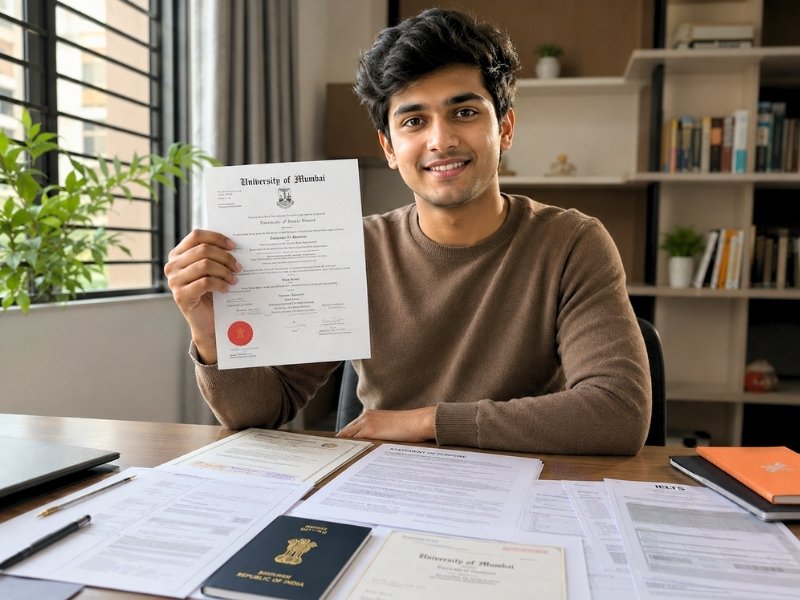
Required Documents
-
Passport and Photograph
A passport valid well beyond your travel dates, plus a recent photograph meeting US visa photo specifications.
-
Form I-20
Issued by your school's Designated School Official (DSO) once you accept your offer and show proof of funds. It carries your SEVIS ID number, which you need to pay the SEVIS fee and complete the DS-160.
-
DS-160 Confirmation Page
The DS-160 is the online nonimmigrant visa application every F-1 applicant must complete before scheduling an interview.
-
SEVIS Fee Receipt
Proof that you have paid the 350 USD I-901 SEVIS fee at fmjfee.com. This must be printed and carried to your interview.
-
Academic Documents
Mark sheets, degree certificates and transcripts used to confirm you meet the academic requirements for your chosen course.
-
Financial Documents
Bank statements, education loan sanction letters, fixed deposits or sponsor affidavits showing you can cover tuition and living costs for at least the first year.
The Main Two Pillars Of Visa Approval
Financial Requirements
- First-year tuition and mandatory fees as stated on Form I-20
- Living expenses (typically 12,000 to 20,000 USD per year depending on the city)
- Travel costs to and from the United States
- Additional dependent costs, if a spouse or child is accompanying you
- Savings account balances and fixed deposits
- Education loans sanctioned by recognised banks or NBFCs
- Sponsor income documents, if a parent or relative is funding your studies
- Scholarship or assistantship letters from your university
Nonimmigrant Intent (Section 214(b))
- Study motivation: Study motivation: Why this course and why this particular university
- Ties to home country: Family, property, career plans or job offers waiting at home
- Career planning: How the US degree connects logically to your future goals
- Consistency: Whether your SOP, documents and interview answers all line up
- Clear about the academic and career reasoning behind studying in the US
- Backed by consistent documents with no contradictions
- Free of vague or memorised answers during the interview
Health Insurance For International Students
Doctor
consultations
Emergency hospital treatment
Medicine
Coverage
Counselling
support
Student Visa Costs And Processing Timeline
Visa Fees (2026)
- SEVIS I-901 fee: 350 USD (approx. ₹33,000, varies with exchange rate)
- DS-160 visa application (MRV) fee: 185 USD (approx. ₹17,700)
- Total mandatory government fees: 535 USD (approx. ₹51,000)
- University application and enrolment deposits
- Courier and document verification charges
- Travel to the visa interview city, where applicable
Processing Time
- Consulate location and appointment availability
- Time of year, since May to August is peak season for student visas
- Whether your application is selected for Section 221(g) administrative processing.
- Interview wait time: 4–8 weeks (varies by city)
- Most decisions are issued on the interview day
- Section 221(g) processing may take several weeks or months
Step-By-Step Application Process
1. Admission Offer
2. Confirmation of Enrolment
3. Document Preparation
Prepare academic, financial and identity documents.
4. GS Statement Preparation
5. OSHC Purchase
6. Application Submission
7. Upload Documents
8. Medical Examination
9. Biometrics
10. Visa Decision
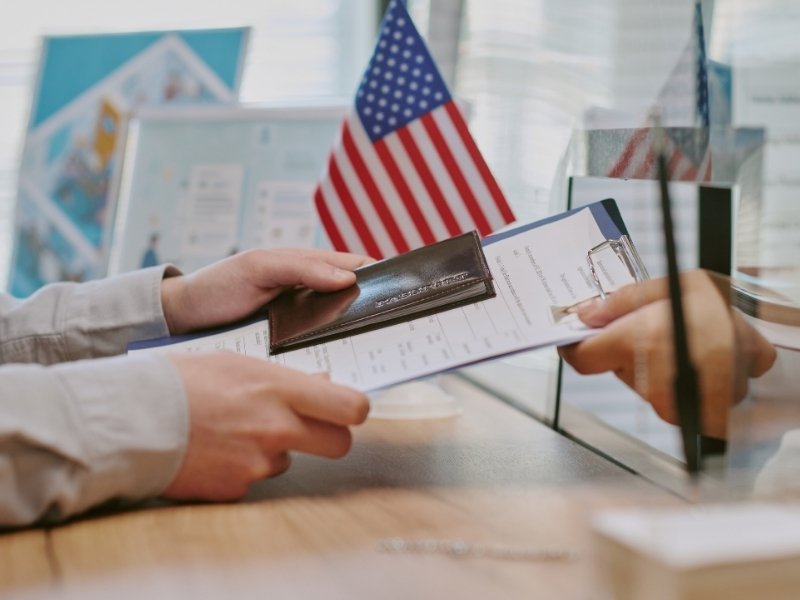
Visa Interview Tips
- Be honest, calm and specific about your course and university
- Know your program details, tuition costs and funding sources well
- Explain clearly why you chose this university and this course
- Make sure your answers match your SOP, I-20 and financial documents
- Keep your social media profiles public and consistent with your application
- Avoid rehearsed or overly generic answers
Common Reasons For F1 Visa Rejection
-
Weak Nonimmigrant Intent
If you cannot clearly show ties to your home country and a reason to return, refusal under Section 214(b) is likely.
-
Insufficient Financial Proof
Bank balances that do not match your declared income, or unexplained large deposits, raise concerns.
-
Poor Academic Fit
If your chosen course does not logically follow from your previous education or career direction.
-
Inconsistent Documents
Any mismatch between your SOP, financial papers and DS-160 answers.
-
Social Media Discrepancies
Undisclosed accounts or content that contradicts your stated purpose of travel.
-
Weak Communication During Interview
Vague, memorised or contradictory answers about your course and plans.
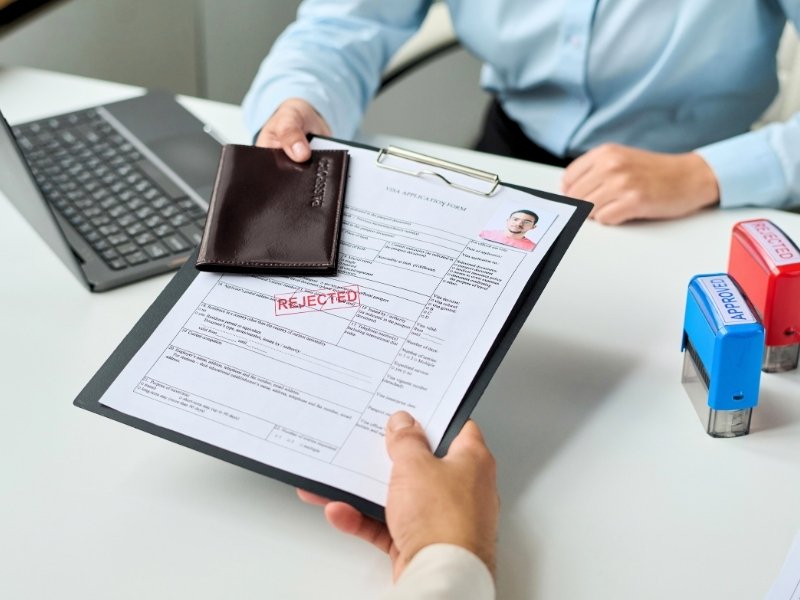
Common Reasons For F1 Visa Rejection
-
Weak Nonimmigrant Intent
If you cannot clearly show ties to your home country and a reason to return, refusal under Section 214(b) is likely.
-
Insufficient Financial Proof
Bank balances that do not match your declared income, or unexplained large deposits, raise concerns.
-
Poor Academic Fit
If your chosen course does not logically follow from your previous education or career direction.
-
Inconsistent Documents
Any mismatch between your SOP, financial papers and DS-160 answers.
-
Social Media Discrepancies
Undisclosed accounts or content that contradicts your stated purpose of travel.
-
Weak Communication During Interview
Vague, memorised or contradictory answers about your course and plans.
