
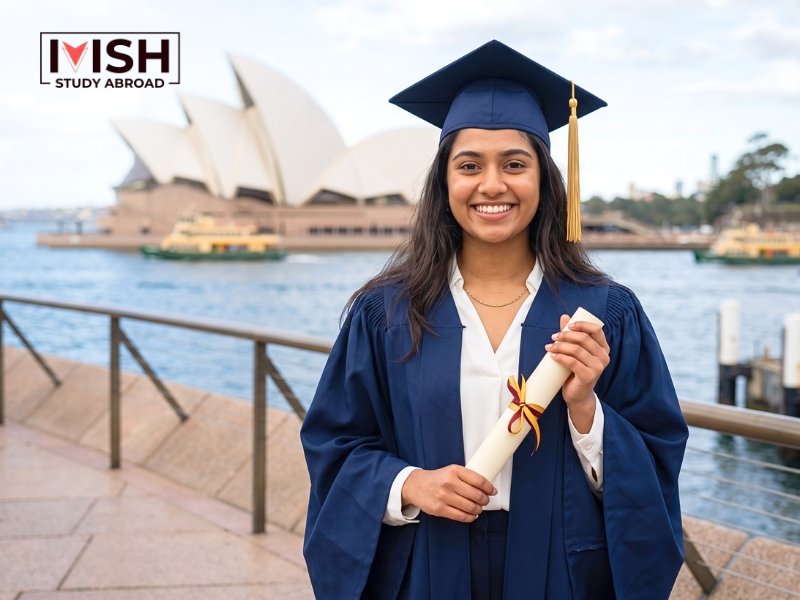
Higher Education in Australia
Australia has grown into one of the most preferred destinations for Indian students who want a globally-recognised degree. From Sydney to Adelaide, Australian campuses host students from more than 140 countries and Indian students now form one of the largest international groups on almost every major campus.
India has consistently ranked among Australia’s top two source countries for international enrolments in recent years, spanning everything from engineering and IT to nursing and business.
If you are exploring higher education in Australia for the first time, the amount of information out there can feel a bit confusing. Which intake should you apply for? What marks do you need in Class 12? How does the student visa actually work?
This guide walks you through the intakes, eligibility criteria, visa process and application timeline you need to plan a successful move. If you want personalised support to plan your higher education in Australia, iVish Study Abroad is a trusted name among study abroad consultants for Australia in Vasai Virar who can guide you through every stage of the journey.
Why Choose Higher Education in Australia?
Choosing to study in Australia is not just about the degree certificate. It is about the entire ecosystem around it, from teaching quality to post-study career opportunities.
1. Globally Recognised Qualifications
Australian universities are consistently ranked among the best in the world, with several institutions featuring in the QS World University Rankings top 100 every year. Degrees earned in Australia are recognised by employers and academic institutions worldwide, which makes an Australian qualification widely acceptable.
2. Research-Driven Teaching
Australian institutions place strong emphasis on applied research and industry-linked learning. Students get access to labs, research centres and industry projects, particularly in fields such as engineering, data science, health sciences and business analytics.
3. Work Rights While Studying
International students holding a valid Student Visa (Subclass 500) can work up to 48 hours per fortnight while their course is in session and unlimited hours during scheduled breaks. This work right helps students manage part of their living costs while gaining local work experience.
4. Strong Post Study Work Pathway
Graduates of Australian institutions may be eligible for the Temporary Graduate visa (Subclass 485), which allows work rights in Australia after completing a course. The duration of this visa depends on the qualification level and study location, giving graduates time to gain professional experience before deciding on their next step.
5. Multicultural And Safe Campus Life
Australian cities regularly rank among the most liveable in the world. Indian students already have well-established communities in Sydney, Melbourne, Brisbane, Adelaide and Perth, which makes the transition into a new country considerably easier. Cultural associations, temples, Indian grocery stores and student societies exist across nearly every major campus town.
6. Multiple Intakes For Flexible Planning
Higher education in Australia is structured around more than one intake, giving students the flexibility to plan their applications, English tests and visa timelines around a schedule that suits them.
For students who are comparing Australia against other countries, speaking with an experienced Australia study consultant in Vasai Virar can help identify which universities and courses match your academic profile and budget.
Higher Education System In Australia
To make an informed decision about higher education in Australia, it helps to understand how the system is structured. Australian qualifications are governed by the Australian Qualifications Framework (AQF), which sets a consistent national standard across every state and territory.
Levels Of Study
- Certificate And Diploma Courses: Offered largely through Vocational Education and Training (VET) providers, these are shorter, skill-focused programmes that often lead directly into diploma-level jobs or credit transfer into a bachelor’s degree.
- Bachelor’s Degree: Typically three to four years depending on the field, with honours years available in some disciplines for students who want to progress into research.
- Postgraduate Diploma And Graduate Certificate: Shorter postgraduate options, usually six months to a year, ideal for professionals looking to specialise without committing to a full master’s degree.
- Master’s Degree: Generally one to two years, split into coursework-based programmes and research-based programmes, with research masters often leading into a PhD.
- Doctoral Degree (PhD): Research-intensive programmes usually spanning three to four years, frequently supported by scholarships such as the Research Training Program.
CRICOS Registration Matters
Every institution and course that enrols international students must be registered on CRICOS, the Commonwealth Register of Institutions and Courses for Overseas Students. Before applying anywhere, confirm that your chosen course appears on the CRICOS register, since this registration is also a mandatory requirement for your student visa application.
Group Of Eight And Beyond
Australia’s Group of Eight (Go8) universities, including the University of Melbourne, University of Sydney, Australian National University and University of Queensland, are known for research strength and global rankings.
Pursuing a degree in Australia means choosing the course, university and city that align with your career goals and this is exactly where guidance from study abroad consultants for Australia in Vasai Virar can help you make informed decisions at every stage.
What Does Studying In Australia Actually Cost?
Tuition fees for higher education in Australia typically range between AUD 20,000 and AUD 45,000 per year for most bachelor’s and master’s programmes, though specialised degrees such as medicine, veterinary science or an MBA at a top-ranked school can cost considerably more.
Living expenses are another important factor to consider, with the Department of Home Affairs currently setting the minimum proof of funds at AUD 29,710 per year for a single student, though actual monthly spending depends heavily on the city you choose.
Cities such as Adelaide and Perth tend to be more affordable than Sydney or Melbourne for rent and daily expenses. When it comes to funding your education, there are several scholarship opportunities worth considering. These include university merit scholarships that may cover 10% to 25% of tuition fees, the Australia Awards Scholarships for eligible international students and the Research Training Program (RTP) for master’s by research and PhD candidates, which provides full tuition support along with a living stipend.
Since scholarship deadlines are often linked to specific intakes, it is advisable to plan your finances while shortlisting universities rather than waiting until you receive an admission offer. This allows you to make informed decisions about your study options while giving you enough time to seek guidance from experienced Australia study visa consultants in Vasai Virar for preparing your financial documents and student visa application.
Intakes In Australia For International Students
Before you begin your application, it is important to understand how intakes in Australia for international students actually work. Unlike some countries with a single entry point each year, Australian universities run a multi-intake calendar.
1. February Intake (Semester 1)
This is the primary and most competitive intake, marking the start of the academic year. Almost every undergraduate and postgraduate programme opens for this intake, along with the widest range of scholarships. Applications typically open around August of the previous year and close between October and November, so students aiming for February should begin preparing at least ten to twelve months in advance.
2. July Intake (Semester 2)
The second major intake among the available intakes in Australia for international students, July suits students who missed the February deadline or need extra time to prepare English test scores, academic documents or finances. Course availability is slightly more limited than in the February intake, but most Business, IT, Engineering and Arts programmes remain fully open, along with a large share of master’s programmes.
3. November Intake (Trimester Entry)
Offered by a smaller number of universities and colleges running trimester-based calendars, this intake is useful for students who need a quicker entry point or missed both earlier windows. Course choice is limited compared to February and July, so confirm with your institution whether your specific programme actually runs a November start.
Why Intake Choice Matters
Choosing the right one among the intakes in Australia for international students can affect course availability, scholarship eligibility, visa processing timelines and even how smoothly you settle into campus life, since new student orientation programmes are usually timed around the February and July starts. Because the National Planning Level introduced in recent years caps new international enrolments at many institutions, applying early within your preferred intake window is more important than it used to be.
Anyone planning to study in Australia should apply at least ten months before their intended start date. This gives you time for entrance tests, document collection, scholarship applications and the student visa process, all of which take longer during peak application periods. Since intake planning varies by university and course, working with dependable Australia study visa consultants in Vasai Virar can help you match your profile to the intake that gives you the strongest chance of admission and scholarship funding.
Get Personalised Guidance For The Right Intake
Eligibility For Higher Education In Australia
Fulfilling the eligibility requirements accurately the first time helps simplify the admission process. Requirements vary slightly by university and course.
For Undergraduate Programmes
- Completion of Class 12 from a recognised board with a minimum aggregate typically between 65 and 80 per cent, though this varies by university and course
- Relevant subject combination for specialised courses such as engineering or science, usually requiring physics, chemistry and mathematics
- English proficiency proof through IELTS, PTE Academic, TOEFL iBT or Cambridge English, with most direct entry programmes asking for an IELTS overall band of 6.0 with no individual band below 5.5
- Students who fall short of the direct entry percentage or English score can often enter through a foundation or diploma pathway that leads into the first or second year of a bachelor’s degree
For Postgraduate Programmes
- A recognised bachelor’s degree in a relevant field, generally with a minimum of 55 to 65 per cent or equivalent GPA depending on the university
- Work experience for select MBA and specialised management programmes, though many general master’s courses do not require it
- English proficiency scores that are typically slightly higher than undergraduate requirements, often IELTS 6.5 overall
- Statement of Purpose, academic transcripts, letters of recommendation and an updated resume, which most universities request as standard application documents
- Relevant subject combination for specialised courses such as engineering or science, usually requiring physics, chemistry and mathematics
- English proficiency proof through IELTS, PTE Academic, TOEFL iBT or Cambridge English, with most direct entry programmes asking for an IELTS overall band of 6.0 with no individual band below 5.5
- Students who fall short of the direct entry percentage or English score can often enter through a foundation or diploma pathway that leads into the first or second year of a bachelor’s degree
For Research Programmes (Masters By Research And PhD)
- A strong academic background in the proposed research area, generally a bachelor’s with honours or a master’s degree
- A research proposal or an area of interest that aligns with a supervisor already working in that field at the chosen university
- English proficiency requirements similar to postgraduate coursework programmes
- Scholarship eligibility through the Research Training Program, which covers tuition and provides a living stipend for eligible candidates
Documents You Will Need At Application Stage
Beyond meeting the academic and English language benchmarks, universities will ask for a specific set of documents before they issue an offer letter. This typically includes attested mark sheets and certificates from Class 10 onward, a passport copy, a Statement of Purpose suited to the course you are applying for, two academic or professional letters of recommendation and, for postgraduate applicants, an updated resume.
Missing or inconsistent documentation is one of the most common reasons student applications are delayed. Working with experienced Australia study visa consultants in Vasai Virar helps your documents get reviewed thoroughly before submission, reducing the chances of unnecessary delays during the admission and visa process.
A Note On The Genuine Student Requirement
Since March 2024, admission alone is not the final hurdle. Every student visa applicant must also satisfy the Genuine Student requirement, which replaced the earlier Genuine Temporary Entrant test. This assessment looks at your academic history, the logic behind your chosen course, your career plans and your ties to your home country. A clear academic thread, for example a commerce degree followed by a master’s in finance, strengthens your case considerably.
Because eligibility criteria differ from one university to another and change from one intake to the next, reviewing your profile with an experienced study abroad consultants for Australia in Vasai Virar before you shortlist courses can prevent avoidable rejections later in the process.
Application Deadlines For Intakes
Once you have an offer letter in hand, the next step toward higher education in Australia is the Student Visa, officially known as Subclass 500. This single visa category covers research-level students, with conditions attached based on your course level.
Documents Required For The Australia Student Visa
- Valid passport with at least six months’ validity beyond your intended stay
- An official enrolment document issued by your CRICOS-registered Australian university after you accept your admission offer and pay the required tuition fee deposit.
- A genuine student statement addressing your academic background, course choice, career plans and ties to your home country
- Proof of financial capacity covering tuition, living costs and travel, currently set at AUD 29,710 per year for living expenses for the primary applicant
- English language test scores such as IELTS, PTE Academic, TOEFL iBT or Cambridge English
- Overseas Student Health Cover (OSHC) purchased from a government-approved provider for your entire intended stay, covering medical, hospital and ambulance costs along with prescription medicines for the full duration of your course
- Academic transcripts, mark sheets and certificates from Class 10 onward
- Passport-size photographs meeting Australian visa specifications
- Additional documents such as work experience letters or sponsor declarations, where applicable
How To Apply For The Australia Student Visa
- Secure admission and receive your Confirmation of Enrolment from a CRICOS-registered institution
- Arrange your financial documents and purchase Overseas Student Health Cover
- Prepare your Genuine Student statement with specific and individual responses rather than generic templates
- Create an ImmiAccount on the Department of Home Affairs website and complete the online application
- Pay the visa application fee and upload all supporting documents
- Complete biometrics and any requested health examinations
- Track your application through ImmiAccount and respond promptly to any further requests
- Receive your visa grant notice and plan your travel to Australia
Processing times vary depending on your course level, the completeness of your documents and the volume of applications during peak intake periods. Because the financial capacity figures, English test benchmarks and Genuine Student expectations are updated periodically, working with reliable Australia study visa consultants in Vasai Virar makes sure your application reflects the current requirements rather than outdated information.
Prepare A Strong Australia Student Visa Application
Application Timeline
Planning your application around a realistic timeline is one of the simplest ways to avoid last-minute stress. Here is a general roadmap that applies to most Australian universities.
Ten To Twelve Months Before Intake
Research universities and courses, shortlist five to seven options based on your academic background and budget and begin preparing for English proficiency tests.
Eight To Ten Months Before Intake
Research universities and courses, shortlist five to seven options based on your academic background and budget and begin preparing for English proficiency tests.
Six To Eight Months Before Intake
Submit university applications, pay application fees where required and track offer letters as they arrive.
Four To Six Months Before Intake
Accept your offer, pay the initial deposit, receive your Confirmation of Enrolment and begin arranging financial documents and Overseas Student Health Cover.
Two To Four Months Before Intake
Lodge your student visa application, complete biometrics and respond to any requests from the Department of Home Affairs.
One Month Before Intake
Book flights, arrange accommodation, attend pre-departure briefings and organise foreign currency or a forex card for initial expenses.
Because many of these steps run in parallel rather than one after another across the different intakes in Australia for international students, mapping them out early prevents document delays from pushing back your entire plan. A structured timeline is one of the most underrated parts of a successful move to study in Australia.
Australia Study Consultant In Vasai Virar
Choosing where to seek admission and visa guidance matters just as much as choosing the right university, particularly with how frequently Australian visa rules and financial requirements have changed over the past two years.
iVish Study Abroad has established itself among the leading Australia study consultant in Vasai Virar by focusing on genuine counselling, updated information and guidance on the complete process to study abroad in Australia for Indian students.
What Makes iVish Study Abroad A Trusted Name
- Personalised counselling that starts with your academic profile, budget and long-term career goals
- Updated guidance on Genuine Student expectations, financial requirements and English proficiency requirements, so your application reflects current rules
- Complete support covering university shortlisting, application filing, scholarship guidance, SOP preparation and end-to-end student visa filing assistance
As study abroad consultants for Australia in Vasai Virar, their team works closely with students at every stage. If your priority is a smooth, well-documented and correctly timed visa application, their Australia study visa consultants in Vasai Virar are here to walk you through each requirement in detail.
Begin Your International Education Journey in Australia
FAQs
What is the minimum percentage required to study in Australia?
Most universities expect a minimum of 65 to 80 per cent in Class 12 for direct entry into a bachelor’s degree, though this varies by institution and course. For postgraduate courses, a minimum of 55 to 65 per cent or equivalent GPA in your bachelor’s degree is commonly required.
Which intake is best for Australia?
The February intake offers the widest course choice and the largest number of scholarships, which makes it the most popular option. The July intake is a strong alternative for students who need extra preparation time, while the November intake suits a smaller number of trimester-based programmes. The best intake in Australia for international students depends on your academic timeline, preferred course and application plans.
Can I work while I study in Australia?
Yes. Students pursuing higher education in Australia on a Student Visa (Subclass 500) can work up to 48 hours per fortnight while their course is in session and unlimited hours during scheduled breaks such as semester holidays. This helps many students manage part of their living expenses while gaining local work experience.
What is the Genuine Student requirement?
The Genuine Student requirement assesses your academic background, the reasoning behind your chosen course, your career plans and your ties to your home country. It is now one of the most closely reviewed parts of any student visa application. Working with an experienced Australia study consultant in Vasai Virar can help you prepare a well-structured application that clearly addresses the Genuine Student requirement.
How long does the Australia student visa take to process?
Processing times move up and down depending on your course level, the completeness of your documents and how busy the intake period is, with the February window typically seeing the longest waits. A clean application well ahead of your intended start date remains the most reliable way to avoid delays. Guidance from established Australia study visa consultants in Vasai Virar before submission can help identify gaps early and minimise unnecessary delays.
Conclusion
Pursuing higher education in Australia is a significant decision that rewards careful planning. From choosing the right intake and meeting eligibility criteria to preparing a proper student visa application, every stage benefits from accurate and current information.
Australia continues to offer what most students are actually looking for: globally recognised degrees, research strength across disciplines, meaningful work rights during study and a clear post-study work pathway through the Temporary Graduate visa. As an experienced Australia study consultant in Vasai Virar, iVish Study Abroad offers reliable admission guidance backed by current university policies and student visa requirements.
Ready to take the next step? Connect with iVish Study Abroad’s expert counsellors today for a one-on-one consultation on courses, costs, intakes and the complete visa process. As dependable study abroad consultants for Australia in Vasai Virar, their experienced counsellors are ready to provide personalised guidance.
